In a follow-up to my post (Landscaped Yard Ushers in Butterflies and Birds) about the Damons’ yard in St. Paul MN, I asked Susan for her favorite plants. Most are natives, a couple non-natives. Here is her reply (thanks Susan!) and more photos.Favorite Forbs:
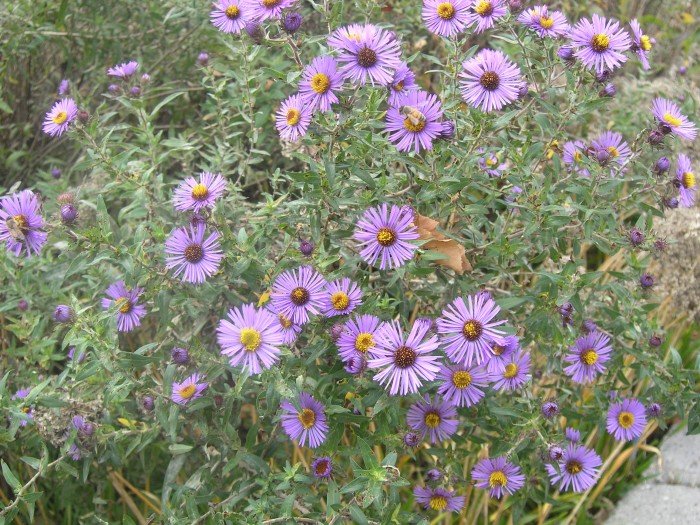
New England Aster (Aster novae-angliae)
New England Aster is an important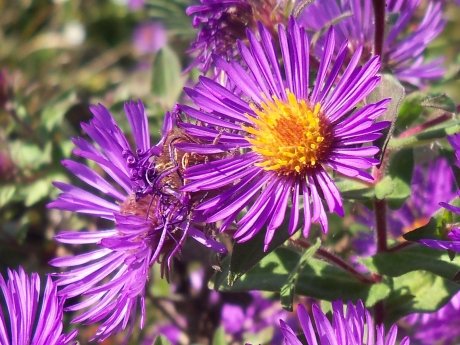 late-blooming nectar source for bees and butterflies. I cut them back in June, which causes them to bloom a little later than they would otherwise and keeps them from getting so tall that they flop over.
Purple Coneflower (Echinacea purpura) A classic prairie plant, great nectar source for butterflies and seed source for goldfinches and other songbirds.
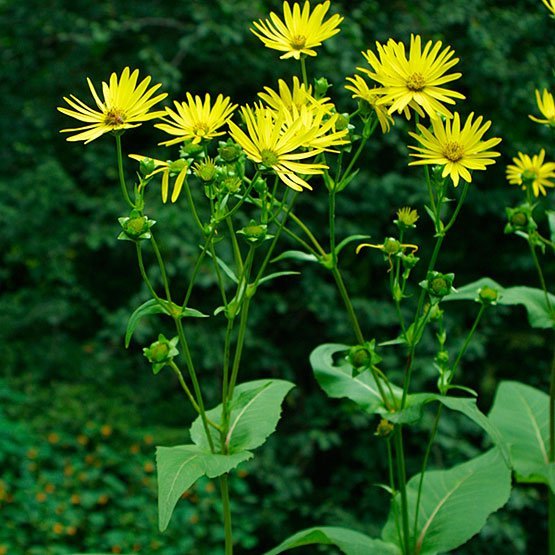
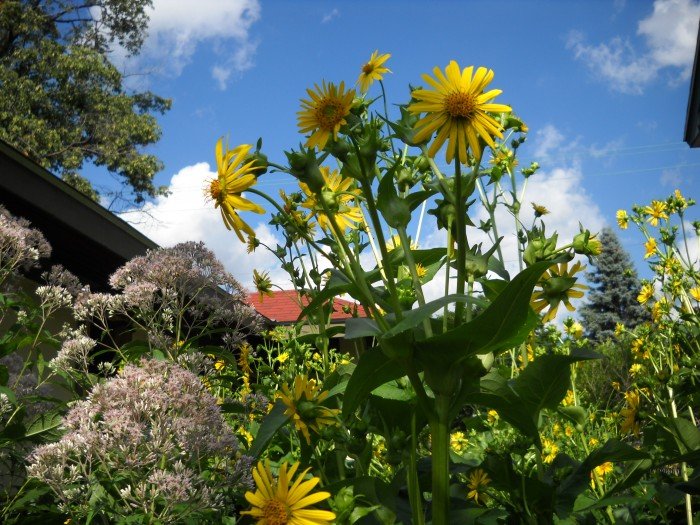
Cupplant (Silphium perfoliatum) This is probably best overall plant for wildlife in our garden. The Cupplant leaves collect rainwater that birds and insects drink. Birds (particularly goldfinches) and even chipmunks love the seeds. Many insects live on the leaves and stems, and we spot warblers gleaning insects from the plants in the late Summer and early Fall.
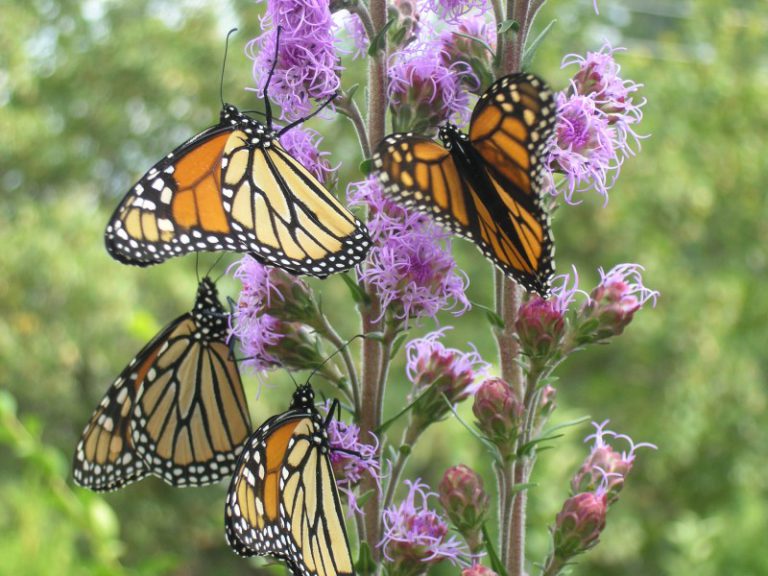
Meadow Blazingstar (Liatrus ligulistylis) This is the undisputed Monarch butterfly magnet. See the attached photo!
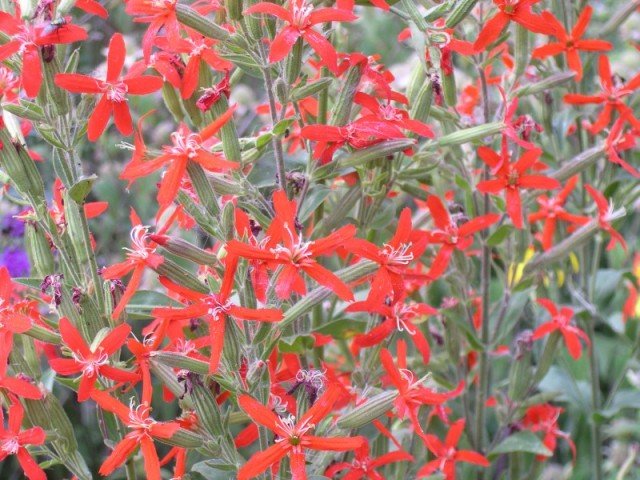
Royal catchfly (Silene regia) This is a fabulous plant for attracting hummingbirds. As soon as it starts blooming, the hummingbirds appear.
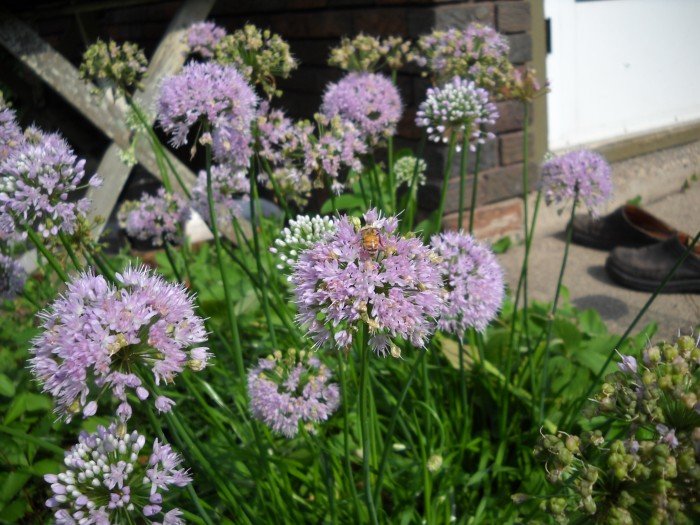
Prairie onion (Allium stellatum) Prairie onion does well in dry conditions and is easy to grow from seed. It is a wonderful nectar source for bees and butterflies, and is attractive throughout the garden season.
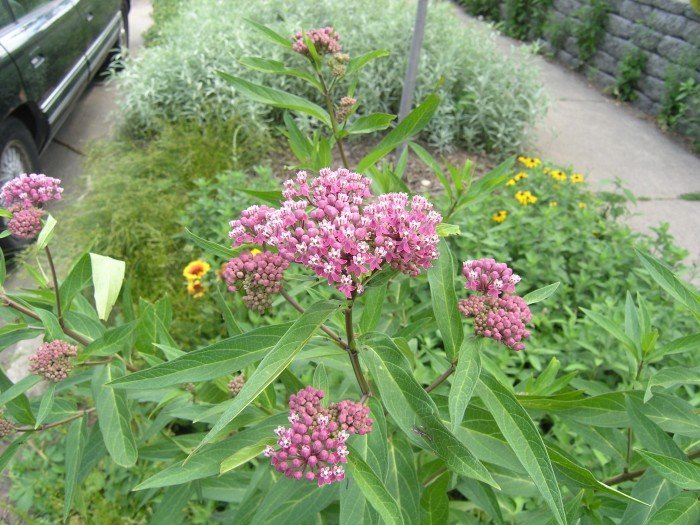
Swamp milkweed (Asclepias incarnata) An extremely attractive, fragrant and long-blooming milkweed species, Swamp milkweed is a wonderful nectar plant in addition to being the host plant for the Monarch butterfly. In our garden, we find more Monarch caterpillars on Swamp milkweed than any of the other milkweed species.
Favorite Grasses:
Junegrass (Koeleria macrantha) This is an early flowering grass that thrives in extremely harsh conditions on our boulevard.
Switchgrass (Panicum virgatum) Switchgrass is an excellent seed source for birds (native sparrows and juncos in particular). It also provides good cover for wildlife and stands up well throughout the winter.


Favorite trees/shrubs:
Serviceberries (Amelanchier species, tree and shrub forms) Serviceberry is the first tree to bloom in our garden in the Spring, providing a critical nectar source for pollinators. The berries, which are very tasty, ripen in June and always draw Cedar Waxwings to our garden. I love these gorgeous, fruit-eating birds! One of my hopes in planting natives was to attract them to the garden.
Red-Twigged Dogwood (Cornus sericea) Red-twigged dogwood is usually associated with moist/wet soils. However, it makes an excellent, fast-growing hedge plant, even in relatively dry conditions. (I hiked in the sand dunes in Van Buren State Park in Southwestern Michigan and saw a huge stand of red-twigged dogwood growing on the top of a dune. It was during the Spring bird migration, and the dogwoods were covered with warblers, which were eating insects on the leaves and blossoms.) The red stems are gorgeous in Winter, songbirds love the berries and dogwoods are the host plant for Spring azure butterflies.
Pagoda Dogwood (Cornus alternifolia) This is an incredibly beautiful small tree. Birds love the berries, which ripen in mid-Summer. We regularly see vireos and catbirds eating the berries on our pagoda dogwood trees. I spotted a brown thrasher eating berries on one of the trees in the Summer
of 2010.
Non-Natives:
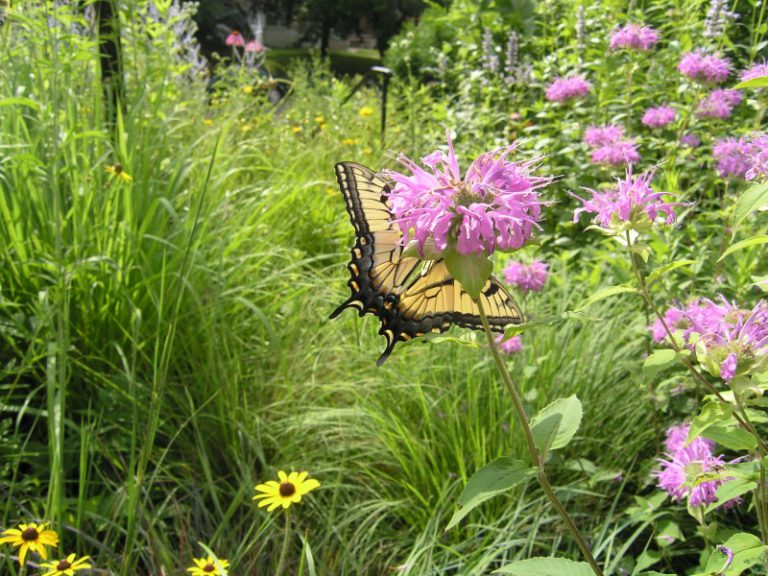
We did initially plant some non-natives, but found that most were not very good at attracting wildlife. About the only non-natives left in our garden are Russian sage, which is a great plant for bees, a few bulbs, which provide nectar for bees in the early Spring, and some bee-balm, which has now hybridized with native Monarda (example seen on the Tiger Swallowtail photo attached).
Great information and beautiful pictures. It makes me want to go out a garden!
I agree. I want to look these up & see if any can make it in southern CA but some like the onions and milkweeds certainly have their ‘western relatives’ that grow well here – Linda
Really gorgeous photos! Made me miss the New England Aster from my years in Maine.
Hi Linda,
In August and Sept. I find that my tropical milkweed, Asclepias curassavica is my best food source for monarchs. Also Hairy Balls, Gomphocarpus physocarpa. I still have many leaves and flowers and seed pods. Every day now I am finding around ten caterpillars. Each caterpillar will eat 28 to 38 leaves before it becomes a chrysalis. So far this year we have released 317 monarch butterflies, monarch waystation 5375. I have had a late start date but right now I am doing very well. I have many flowers for nectar I find that Lantana works the best and easiest for me. I call it my magnet plant. Butterflys like flowers that lay flat like Rubeckia Denver Daisy, Mexican Daisy, Scabiosa atropurpurea, Marigold Harlequin, Queen Anne’s Lace, Cosmos, Hollyhock, Purple cone flower,Shasta daisy and Butterfly bush. California has a new book out for Native plants called Wildflowers of Orange County and the Santa Ana Mountains by Robert L. Allen and Fred M. Roberts, Jr. Native milkweeds for Calif. are in this book on page 57 to 59. Also a new one for me called Funastrum cynanchoides it is a climbing milkweed on page 57. Please keep in mind the weather. Butterflies are cold blooded, therefore it must sit in the sun until their body temperature reaches about 65 degrees fahrenheite. Same thing if it is to hot they cannot cool down. You will find them hiding in the shade. Butterflies also have a lot of predators, spiders, wasps, tachinid fly, praying mantis, lizards and birds just to name a few. It is very easy to become a monarch waystation just go to http://www.monarchwatch.org for the details. If all gardners just planted a few host and nectar plants for butterflies we could bring numbers back up. My son and I were in San Diego and saw lots of monarchs in Balboa Park and on Sat. in Laguna Beach I saw a lot of monarchs. Remember they a sleepy heads typically they will start flying around 10:00 AM and start looking for a place to sleep by 5:00 PM. We can all speculate about what is the cause of the declining numbers or we can work together and plant the host and nectar plants that they need to bring the numbers back up. All talk is never good. Let’s see some action.
Sincerely,
Monika U. Moore